

When discussing the global rise in obesity, type 2 diabetes, and metabolic syndrome, the conversation usually revolves around eating too many calories and a sedentary lifestyle. However, a groundbreaking fructose metabolic effects study published in the journal Nature Metabolism is fundamentally shifting how the medical and scientific communities view sugar.

Led by researchers including Dr. Richard Johnson from the University of Colorado Anschutz Medical Campus, this comprehensive review proves that fructose—the simple sugar found in table sugar, high-fructose corn syrup, and processed foods—is not just an innocent source of energy. Instead, it acts as a highly specific metabolic signal that directly promotes fat production, depletes cellular energy, and drives chronic disease.
If you are looking for full information on how your body processes this common sweetener, here is a complete breakdown of the latest scientific findings and what they mean for your health.
Also Read : – The Rise of Drug-Resistant Shigella in the US: What You Need to Know
Bypassing the Rules: Fructose vs. Glucose
To understand the metabolic effects of fructose, you first have to understand how it differs from glucose. While both are simple sugars, they are handled by the body in entirely different ways.
- Glucose: When you consume glucose (found in complex carbohydrates like rice and potatoes), it enters the bloodstream and is utilized by virtually every cell in your body for immediate energy. Its metabolism is strictly regulated by insulin and internal feedback loops that tell the body when it has had enough.
- Fructose: Fructose bypasses these critical regulatory steps. It is metabolized almost entirely in the liver. Because it ignores the body’s normal energy-regulating checkpoints (such as the phosphofructokinase-1 feedback inhibition), the liver is forced to process all of it rapidly, converting the excess directly into fat.
Dr. Johnson and his team emphasize a critical takeaway: “Fructose is not just another calorie.” It alters your biological pathways to prioritize fat storage over energy usage.
The “Survival Switch” and Cellular Energy Depletion
One of the most fascinating aspects of the recent fructose metabolic effects study is the concept of the “survival switch.”
Evolutionarily, fructose was a rare nutrient, mostly consumed during the late summer and fall when fruits ripened. The unique metabolic effects of fructose—specifically its ability to rapidly convert into fat and decrease resting cellular energy—helped early humans and animals store enough body fat to survive the winter when food was scarce.
Here is how the mechanism works:
- As the liver metabolizes high amounts of fructose, it rapidly depletes ATP (adenosine triphosphate), the primary energy currency of your cells.
- This sudden drop in cellular energy acts as an alarm bell.
- Even if you just consumed hundreds of calories from a sugary soda, your cells “think” you are starving because ATP levels plummeted.
- Consequently, this triggers hunger, increased food intake, and the locking away of calories as stored body fat.
In today’s environment, where cheap, high-fructose foods are available year-round, this ancient survival mechanism is stuck in the “on” position, directly driving the obesity epidemic.
The Hidden Danger: Internal Fructose Production
Perhaps the most alarming revelation from recent metabolic studies is that you do not even need to eat fructose to suffer its adverse effects. The human body can manufacture fructose internally.
When you consume a high-glycemic diet (eating large amounts of processed carbohydrates that rapidly spike your blood sugar), the body activates a pathway that converts the excess glucose into fructose. This means that a diet heavy in refined starches—even if it is technically low in added sugars—can still trigger the exact same fat-storing, energy-depleting metabolic dysfunction.
Also Read : – Kent Meningitis Outbreak: What You Need to Know Right Now
Whole Fruit vs. Added Fructose: What You Need to Know
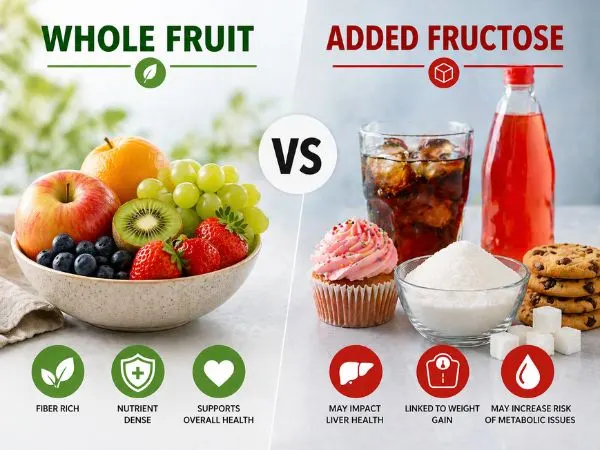
A common concern when reading a fructose metabolic effects study is whether you need to stop eating fruit. The scientific consensus is a resounding no.
The metabolic dangers of fructose are tied to the speed and concentration at which it hits your liver.
- Whole Fruits: When you eat an apple or a handful of berries, the fructose is bundled with water, fiber, and micronutrients. The fiber drastically slows down the digestive process, allowing your liver to process the small amount of fructose safely without triggering the fat-storage survival switch.
- Free Sugars: The real danger comes from “free sugars” in processed foods. Sugary beverages, sodas, fruit juices (where the fiber is removed), and high-fructose corn syrup hit the liver in a massive, concentrated wave, overwhelming the system and causing immediate metabolic dysfunction.
How Fructose Drives Metabolic Syndrome
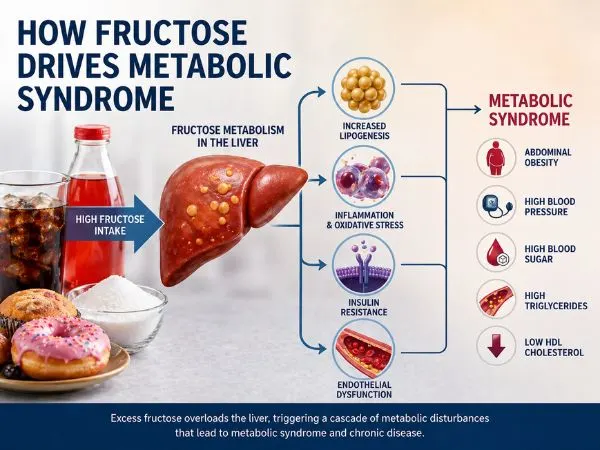
The downstream effects of chronic, high-fructose consumption are severe. The study links this metabolic bypass to several core components of metabolic syndrome:
- Non-Alcoholic Fatty Liver Disease (NAFLD): Because the liver converts excess fructose straight into fat (a process called de novo lipogenesis), fat droplets accumulate in the liver, leading to inflammation and liver disease.
- Insulin Resistance: The accumulation of liver fat and the inflammatory byproducts of fructose metabolism interfere with insulin signaling, a precursor to type 2 diabetes.
- Uric Acid Production: Fructose metabolism produces high levels of uric acid. Elevated uric acid is not only the primary cause of gout, but it also inhibits nitric oxide in the blood vessels, leading to high blood pressure and an increased risk of cardiovascular disease.
Frequently Asked Questions (FAQ)
Does a fructose metabolic effects study suggest all sugar is toxic?
Not exactly. The studies suggest that the dose and context matter. Small amounts of fructose found naturally in whole, fiber-rich fruits are healthy. The toxicity and metabolic damage occur when large amounts of concentrated, added fructose (like high-fructose corn syrup or table sugar) are consumed regularly.
Why is high-fructose corn syrup (HFCS) considered worse than table sugar?
Table sugar (sucrose) is exactly 50% glucose and 50% fructose bound together. HFCS is often a blend of 55% free fructose and 45% glucose. Because the fructose in HFCS is not chemically bound to the glucose, it hits the liver even faster, though both forms of added sugar drive the same adverse metabolic effects when consumed in excess.
Can the metabolic damage from fructose be reversed?
Yes. Studies indicate that dramatically reducing the intake of added sugars and processed foods, increasing fiber intake, and exercising can restore liver function, improve insulin sensitivity, and replenish cellular ATP levels.