Feeling stiff after long hours at a desk? Finding it hard to slow down after a busy day? Yin yoga offers a gentle way to stretch, breathe, and spend time with your body.
Unlike fast yoga styles, Yin yoga uses seated and floor-based poses held for several minutes. The practice focuses on slow movement, stillness, and mindful breathing.
Many people try Yin yoga for better flexibility, stress relief, and sleep. But long holds need care. Going too deep can strain joints and other tissues.
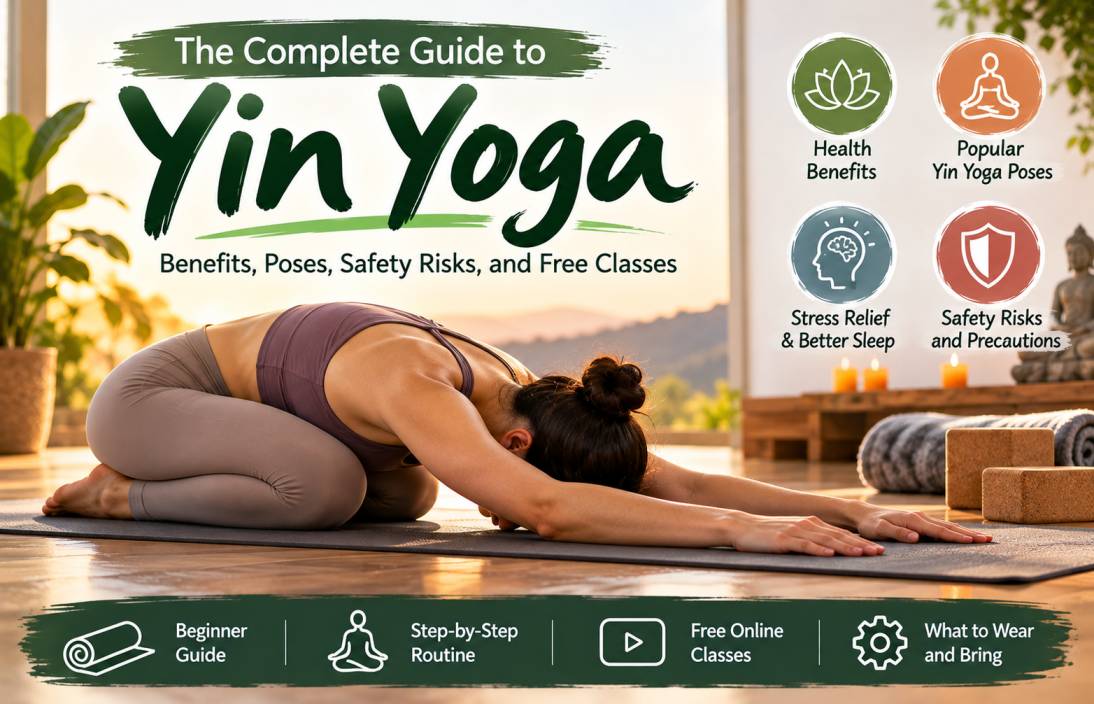
This guide covers Yin yoga benefits, beginner poses, safety tips, free classes, and a simple routine you can save for home practice.
What Is Yin Yoga? (Origins and Practice)
Yin yoga is a slow style of yoga built around passive poses. You settle into a position, relax the muscles as much as you can, and stay there for a set time.
Many classes hold each pose for around three to five minutes. Some use shorter holds for beginners. Others allow longer holds when the pose feels safe and manageable.
Yin yoga grew from ideas found in Chinese Taoist thought and modern yoga practice. Teachers such as Paulie Zink, Paul Grilley, and Sarah Powers helped shape the form taught in many studios today.
The Core Principles of Yin Yoga: Stillness and Time
Yin yoga is often taught through three simple principles:
1. Find your edge. Move into a pose until you feel a mild to moderate stretch. You should not feel sharp pain or pressure that makes you tense.
2. Be still. Once you find a safe position, let your body settle. Small changes are fine if you feel discomfort or need more support.
3. Hold the pose. Stay for a period that suits your body. A beginner may start with one or two minutes, then build up with practice.
Yin yoga often aims to place gentle, sustained stress on connective tissues, such as fascia and ligaments. But long holds do not guarantee healthier joints or repaired tissue. Research on Yin yoga itself remains limited.
How Yin Yoga Differs from Restorative and Vinyasa Yoga
These styles can look similar at first, but each has a different aim.
| Yoga Style | Main Focus | Typical Practice |
| Yin yoga | Slow, passive stretching | Poses held for several minutes |
| Restorative yoga | Deep rest and support | Poses held with props, often for 5–10 minutes or longer |
| Vinyasa yoga | Movement, strength, and breath | Poses linked in a flowing sequence |
Yin yoga asks you to stay with a mild stretch. Restorative yoga uses props to reduce effort and support full relaxation. Vinyasa uses more active movement and muscle work
Top Health Benefits of Yin Yoga
Yin yoga can be a useful part of a balanced fitness routine. Its slow pace gives you time to notice tension, move with care, and focus on your breath.
Research on yoga as a whole suggests possible benefits for stress, mental health, sleep, balance, and some types of pain. These results do not prove that Yin yoga alone causes every benefit.
Physical Benefits: Joint Mobility, Fascia Health, and Flexibility
Yin yoga gives you time to work on your range of motion. Poses for the hips, legs, and back can help you notice areas that feel tight.
Long, gentle holds may help improve flexibility over time. But you don’t need to push into deep stretches to gain value from the practice.
You may find poses such as Butterfly, Sphinx, and Caterpillar useful for gentle stretching. The right pose depends on your body, joint range, and health history.
One point matters: Yin yoga is not a cure for joint pain or a treatment for damaged ligaments. Stop if a stretch causes sharp pain, tingling, or numbness.
Mental and Emotional Benefits: Stress Relief and Nervous System Regulation
A slow yoga session creates time to pause and pay attention to your breath.
Gentle breathing and quiet movement can help you feel calmer after a stressful day. You may find it easier to notice where you hold tension in your jaw, shoulders, or hips.
Yoga research suggests that practice can help some people manage stress and anxiety. The effect varies from person to person, and Yin-specific evidence is still developing.
Try breathing in through your nose and breathing out at a slow, easy pace. Don’t force deep breaths or hold your breath during a pose.
Yin Yoga for Sleep, Anxiety, and Mindful Relaxation
An evening Yin yoga session can help you shift from work and daily tasks to a calmer routine.
Choose simple poses, dim the lights, and keep your practice short enough to feel restful. A ten- to twenty-minute session may be a good start.
Yin yoga is not a replacement for care for anxiety or long-term sleep problems. But it may offer a helpful way to pause, breathe, and release some physical tension before bed.
Dangers of Yin Yoga: Risks, Side Effects, and How to Practice Safely
Yin yoga is gentle in pace, but that doesn’t make every pose safe for every body.
Holding a stretch for a long time can put stress on joints and tissues. Your aim should be a comfortable stretch, not the deepest position you can reach.
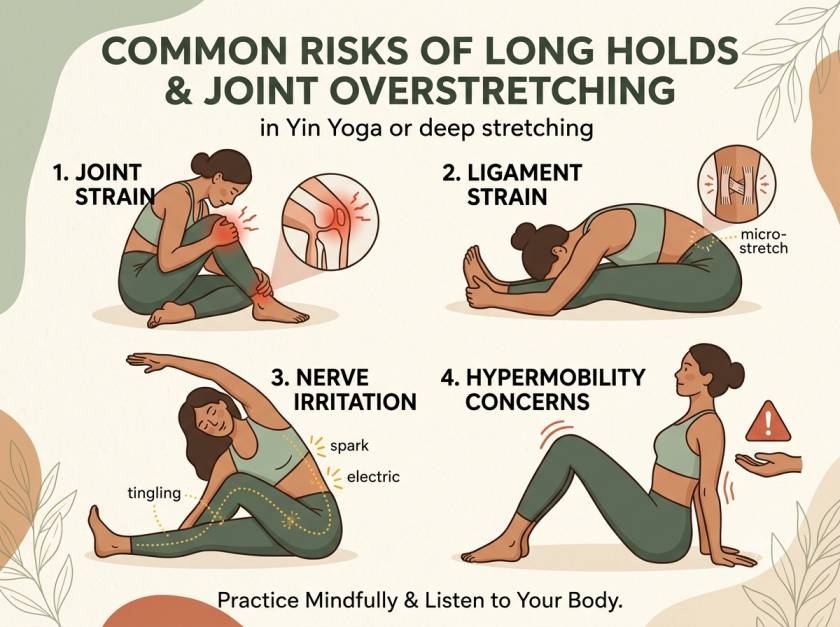
Common Risks of Long Holds and Joint Overstretching
Common problems include:
- Joint strain: Staying at the end of your range can put too much stress on a joint.
- Ligament strain: Ligaments support joints. Forcing a deep position may place too much load on them.
- Nerve irritation: Tingling, numbness, or sharp pain can signal that you need to change position.
- Hypermobility concerns: People with very flexible joints may need less stretch, not more.
You don’t need to feel pain for a pose to work. Leave the pose if your body starts to feel strained or your symptoms increase.
Who Should Avoid Yin Yoga or Use Extra Caution?
Talk with a healthcare professional or qualified yoga therapist before starting if you have:
- Joint hypermobility or a condition that makes your joints unstable.
- Osteopenia or osteoporosis.
- A recent injury, surgery, or joint replacement.
- Ongoing back, hip, or knee pain.
- A condition that affects balance or sensation.
People with low bone density may need to avoid or adapt deep forward bends and end-range twists. The safest choice depends on the person’s health and fracture risk.
Safe Practice Guidelines: Find Your Edge Without Pain
Use props to keep your body supported.
A bolster can support your chest or hips. Blocks can reduce the reach of a pose. Folded blankets can cushion your knees and ankles.
Start with short holds. Keep breathing at an easy pace, and leave enough time to move out of each pose slowly.
A pose should feel steady and manageable. Pull back if you feel sharp pain, pins and needles, numbness, or pressure inside a joint. A teacher can help you find safer options.
Essential Yin Yoga Poses for Beginners
You don’t need advanced poses to begin. Start with a few simple positions and learn how your body responds.
Top 5 Basic Yin Yoga Postures for Hip and Spine Health
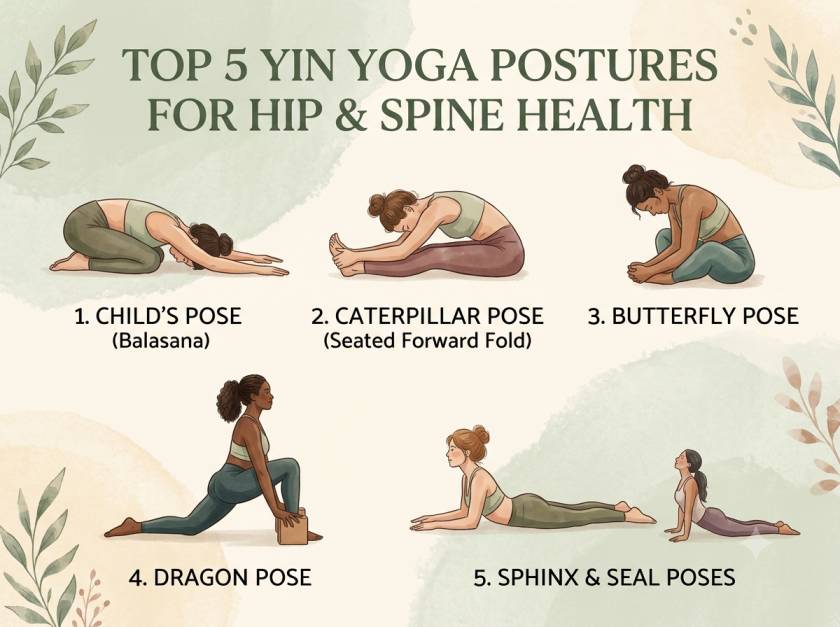
1. Child’s Pose (Balasana)
Kneel on the floor, bring your hips back toward your heels, and rest your upper body forward. Place a bolster or pillow beneath your chest if that helps. Use a folded blanket under your knees when needed.
2. Caterpillar Pose (Seated Forward Fold)
Sit with your legs stretched in front of you. Bend forward only as far as feels comfortable. Keep your knees bent if your hamstrings feel tight. If you have low bone density or back problems, ask a qualified professional about a safer option.
3. Butterfly Pose
Sit with the soles of your feet together and let your knees move outward. Keep your feet a comfortable distance from your hips. Support your knees with blocks or cushions rather than pressing them down.
4. Dragon Pose
Step one foot forward and place the other knee on a padded surface. This pose stretches the front of the hip. Keep your front knee in a position that feels stable, and use blocks beneath your hands.
5. Sphinx and Seal Poses
Lie on your stomach and place your forearms on the floor for Sphinx Pose. Lift your chest gently without forcing your lower back. Seal Pose uses a deeper lift and is not right for everyone. Skip it if it causes back pain or pressure.
Does Yin Yoga Have a Fixed Set of 26 Poses?
There is no universal 26 Yin yoga poses sequence used by every teacher. Yin classes vary by instructor and goal. A teacher may choose poses for the hips, spine, legs, or full body.
This differs from Bikram yoga, which follows a fixed sequence. Focus on learning safe positions instead of trying to complete a set number of poses.
Printable Yin Yoga Sequence Routine: 15–30 Minutes
Save this short routine for a simple home session. Use a timer, move slowly, and shorten any hold that feels too intense.
| Pose | Suggested Hold |
| Child’s Pose | 2 minutes |
| Butterfly Pose | 2 minutes |
| Caterpillar Pose | 2 minutes |
| Sphinx Pose | 1–2 minutes |
| Supported supine rest | 3 minutes |
Allow time to change positions between poses. Repeat only if you feel comfortable. This is a beginner outline, not a treatment plan or a substitute for personalised guidance.
How to Find the Best Yin Yoga Classes and Online Videos
A good teacher explains how to use props, offers pose changes, and tells you when to come out of a stretch.
Look for classes marked beginner, gentle Yin, or slow Yin. Check the teacher’s instructions before trying a long session.
Best Free Yin Yoga YouTube Channels and Full-Length Classes
Yoga with Kassandra offers free Yin yoga classes in a range of lengths. Her official site lists free full-length weekly Yin and Vinyasa classes for different experience levels.
You can start with her 90-minute Yin yoga class, but a shorter beginner class may be easier for your first session.
Search YouTube for terms such as:
- 15-minute Yin yoga for beginners
- Gentle Yin yoga for hips
- Evening Yin yoga for relaxation
- Yin yoga with blocks and bolsters
Read the video details and check whether the instructor offers modifications. You can pause at any time and rest.
In-Studio vs. At-Home Yin Yoga Classes: Which Is Right for You?
An in-studio class gives you direct help from a teacher. This can be useful if you are new, have limited mobility, or need pose changes.
At-home Yin yoga gives you more control over time and pace. You can use cushions, folded blankets, and sturdy books in place of some yoga props.
For beginners, a guided studio class can help you learn the basics. Free online classes can help you build a regular routine after you feel more confident. You can use both options based on your needs.
Final Thoughts: Is Yin Yoga Right for You?
Yin yoga offers a slow way to stretch, breathe, and make time for rest. It may help with flexibility, stress management, and a calmer evening routine.
But long holds need care. Don’t chase deeper stretches or ignore pain. Use props, begin with short sessions, and ask for advice if you have joint, bone, or back concerns.
Start with a few basic poses and a free beginner class. With time, you can learn which positions feel right for your body and build a safe routine that fits your day.