
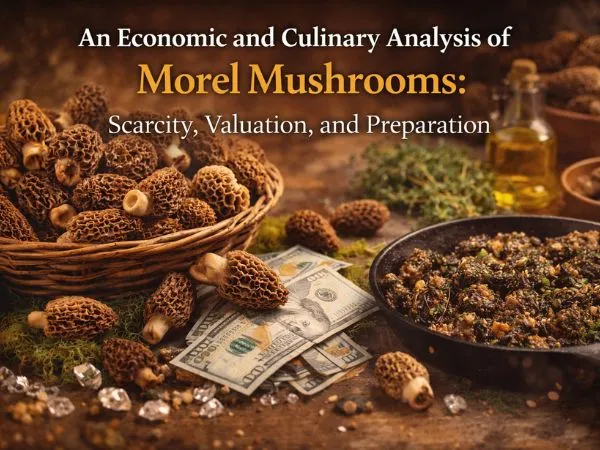
Within the sphere of haute cuisine, certain ingredients command extraordinary valuations due to their rarity and distinctive flavor profiles. The morel mushroom (Morchella) exemplifies this tier of culinary luxury. Characterized by a highly complex, earthy, and nutty flavor profile, the morel is frequently utilized to elevate standard gastronomic offerings. However, its significant market price necessitates a thorough examination of the biological, logistical, and economic factors that contribute to its premium valuation.
The Discrepancy in Luxury Food Valuations
The contemporary luxury food market frequently exhibits a disproportionate relationship between cost and culinary satisfaction. Consumers often encounter highly priced ingredients, such as certain commercial truffles or caviars, which may fail to deliver an organoleptic experience commensurate with their financial premium. This pervasive commodification often generates consumer skepticism; therefore, it is imperative to distinguish artificially inflated trends from items whose valuation stems from genuine scarcity and distinctive quality.
Also Read : – Health Benefits Of Black Coffee And Side Effects
Biological Constraints and the Impossibility of Cultivation
The primary factor driving the high cost of morel mushrooms is their resistance to commercial agricultural cultivation. Unlike widely available varieties, such as the white button mushroom (Agaricus bisporus), which can be mass-produced in controlled environments, morels rely on a complex, symbiotic mycorrhizal relationship with specific tree species. They require highly precise ecological conditions, including specific soil composition and temperature fluctuations, to initiate fruiting. Due to these intricate biological dependencies, mass commercial farming remains largely unfeasible. Consequently, the global supply of morels is almost entirely dependent on labor-intensive wild foraging.
Regional Harvesting Practices: The Himalayan “Gucchi”
The logistical challenges of foraging are particularly evident in the Himalayan regions of India, specifically within Kashmir and Himachal Pradesh, where the local morel variant is referred to as “Gucchi.” The harvesting process in these high-altitude environments is physically demanding and hazardous. Local foragers must traverse steep, treacherous mountain terrains in adverse weather conditions to locate these camouflaged fungi beneath forest debris and snow. Following successful extraction, the morels are manually threaded and dehydrated over wood fires to ensure preservation. The final market price inherently reflects the immense physical labor and significant time expenditure required to harvest them in such unforgiving topographies.
Market Valuation: Analyzing the Cost Per Kilogram
An objective analysis of the market data illustrates the extraordinary financial premium commanded by this fungus. The morel mushroom cost per kg fluctuates based on regional availability and quality, but it consistently remains within the upper echelons of agricultural pricing. In Western markets, fresh specimens frequently retail for approximately one hundred dollars per pound. However, the dehydration process significantly amplifies this cost. Because the dehydration process necessitates an approximate 10:1 ratio of fresh to dried mass, the market price of dried morels increases exponentially. Within the Indian market, a kilogram of premium dried Gucchi can command prices ranging from 15,000 to over 30,000 rupees, establishing it as one of the most expensive natural commodities available.
Also Read : –How to Make Guacamole at Home: A Complete Guide to Fresh Avocado Flavor
Ecological Parameters and Seasonality
The scarcity of morels is further compounded by a highly restricted harvesting window. The morel mushroom season is intrinsically linked to the vernal equinox, typically occurring between late March and May. The emergence of the fruiting bodies is strictly contingent upon the soil reaching an optimal temperature following the winter freeze. Variations in climate—such as premature heat waves or prolonged frosts—can severely inhibit their growth. This narrow, unpredictable window of viability intensifies the urgency of foraging efforts and drastically limits the annual supply.
Proliferation Following Wildfires
Ecological research has documented a unique phenomenon regarding the proliferation of morels following forest fires. In subsequent spring seasons, burned coniferous forests often yield substantial quantities of morel mushrooms. It is hypothesized that the introduction of ash significantly alters the soil’s alkalinity and chemical composition, acting as an ecological catalyst for the dormant fungal networks. Professional foragers actively monitor wildfire maps, undertaking extensive travel to survey burn sites. This practice underscores the unpredictable and often hazardous environments required to secure a profitable harvest.
Nutritional Profile and Health Benefits
Beyond their culinary applications, the morel mushroom benefits encompass a robust nutritional profile. Morels are recognized as a significant natural source of Vitamin D, a rarity among non-animal food sources, achieved through their exposure to ambient sunlight in the wild. Additionally, they provide substantial quantities of dietary iron and various antioxidants. As a purely wild-foraged food source, they are typically devoid of the synthetic pesticides and chemical fertilizers common in commercial agriculture, appealing to consumers seeking unadulterated, nutrient-dense ingredients.
Also Read : – 20 Healthy Breakfast Fast Food Choices (Ranked by Nutrition, Protein, and Real-World Value)
Identification Risks and the Hazard of False Morels
The procurement of wild-foraged fungi carries inherent biological risks. It is critical to differentiate true morels from highly toxic species commonly known as “false morels” (e.g., Gyromitra species). While visually similar, true morels possess a distinctly hollow interior extending from the apex to the stem. Conversely, false morels exhibit a solid, fibrous internal structure. Ingestion of false morels can result in severe gastrointestinal distress and requires immediate medical intervention. Therefore, procurement should be strictly limited to verified, professional purveyors to mitigate the risk of accidental poisoning.
Culinary Protocols for Preparation
Proper culinary execution is essential to maximize the value of this premium ingredient. Guidelines regarding morel mushroom how to cook dictate a specific, methodical approach. When utilizing dehydrated specimens, an initial rehydration phase is mandatory. The mushrooms must be submerged in warm water for approximately twenty minutes until pliable. The residual liquid, which extracts significant umami flavor compounds, should be retained and utilized as a highly concentrated stock for subsequent culinary applications, such as sauces or reductions.
Recommended Cooking Methodologies
Following rehydration, the application of heat should be measured and deliberate. Culinary consensus recommends sautéing the morels over medium heat using high-quality lipids, predominantly unsalted butter, paired with a conservative application of aromatics, such as minced garlic. This technique allows the mushroom’s porous structure to absorb the lipids while carefully preserving its inherent earthy flavor profile. The addition of heavy cream and precise seasoning towards the end of the cooking process yields a refined product optimal for pairing with artisanal breads or premium proteins.
Toxicity Remediation Through Thermal Processing
A critical safety protocol must be observed regarding the consumption of morel mushrooms: they must never be consumed raw. Uncooked morels contain thermolabile toxins that can induce severe gastrointestinal illness. Comprehensive thermal processing (cooking for a minimum of five to seven minutes) effectively neutralizes these compounds, rendering the fungi entirely safe for human consumption.
Also Read : – Veg Protein Rich Food: Complete Guide for Indian Vegetarians, Weight Loss, Muscle Building, and Thyroid Health
Conclusion: Evaluating the Cost-to-Value Proposition
Ultimately, the exceptional market valuation of the morel mushroom directly reflects its biological scarcity, the intensive labor required for extraction, and its restricted seasonality. While the cost prohibits frequent consumption for the average consumer, it remains a highly coveted ingredient for significant culinary events. The morel provides a unique, complex flavor profile that establishes a direct sensory connection to its wild origin, arguably justifying its status as a premier luxury ingredient within the global gastronomic landscape.