
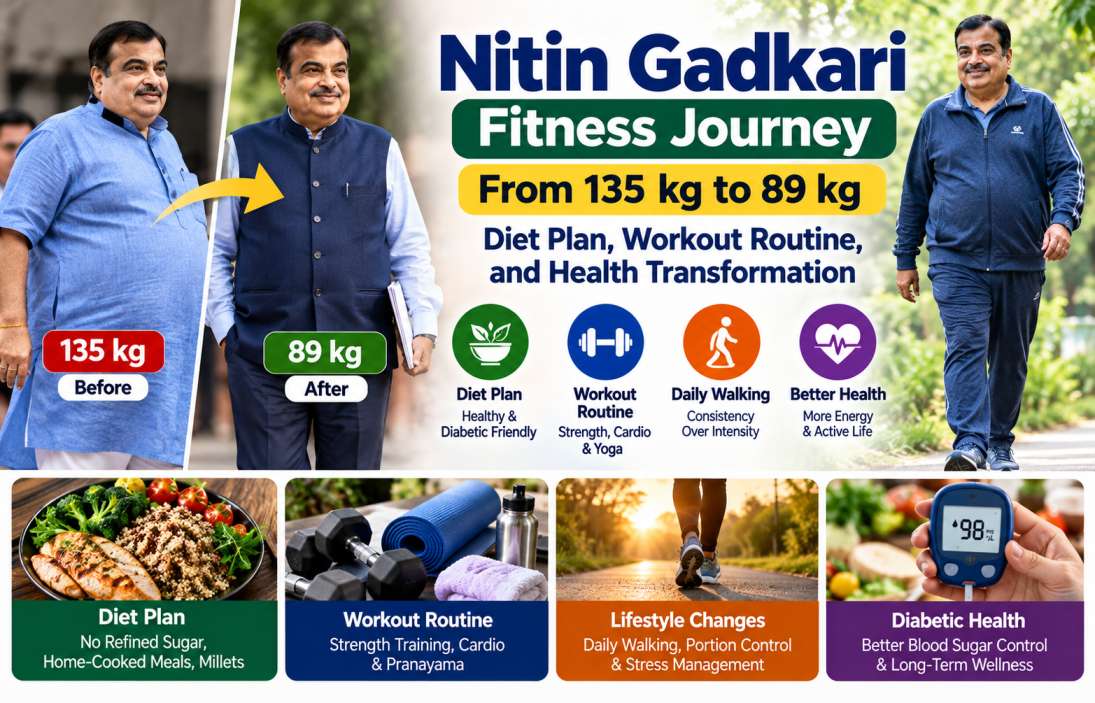
Nitin Gadkari’s weight loss has drawn attention for years. The Union Minister for Road Transport and Highways has spoken about going from around 135 kg to 89 kg. That’s a reported reduction of 46 kg.
His story involves more than one lifestyle change. News reports confirm that he underwent gastric bypass surgery in 2011 to help manage Type 2 diabetes. In later interviews, he discussed eating smaller portions, practising pranayama, and making exercise part of his daily routine. NDTV and Aaj Tak covered these details.
His experience offers lessons for people who want to improve their health after 50. It also shows why there is no single weight-loss plan that works for everyone.
The Turning Point: Why Nitin Gadkari Decided to Transform His Health
Gadkari has spoken about the need to give health more attention, even with a demanding work schedule. His public comments link his later focus on exercise to a change in how he viewed his health and daily habits.
Managing a Demanding Political Career While Prioritising Health
A busy job can make regular exercise and balanced meals hard to maintain. Long meetings, travel, late nights, and irregular meal times can disrupt a person’s routine.
Gadkari has described a schedule that often keeps him busy late into the night. In a video shared by filmmaker Farah Khan in 2026, he said he may finish appointments around 1 a.m., wake at 7 a.m., and spend two to two-and-a-half hours exercising. The Indian Express reported his comments.
That amount of exercise is far more than most people need. You don’t have to copy his hours to improve your fitness.
A busy person can begin with short walks, simple strength exercises, and fixed meal times. The goal is to find habits that fit your schedule and remain practical over the long term.
The Wake-Up Call: Reaching 135 kg and Reclaiming Vitality
In public remarks, Gadkari has reported that his weight was once around 135 kg and later fell to around 89 kg. He has described this change as part of a wider effort to take better care of himself.
His medical history is a key part of the story. In September 2011, reports from NDTV and other news outlets said he underwent gastric bypass surgery at Saifee Hospital in Mumbai to help treat Type 2 diabetes. Doctors had been concerned about his difficulty controlling blood sugar and early kidney complications linked to diabetes.
This detail matters. His weight change should not be presented as the result of a simple diet trick or a walking routine alone.
Gastric bypass is a major medical procedure. It changes the digestive system and can affect appetite, food intake, and blood sugar control. It is not a routine step for everyone who wants to lose weight.
The Secret Behind the Transformation: Diet and Lifestyle Shifts
When people search for the Nitin Gadkari weight loss diet plan and routine, they often expect a strict menu or a list of foods he stopped eating.
Public interviews offer a more limited picture. Gadkari has discussed eating smaller portions and adding pranayama and exercise to his routine. There is no reliable public source confirming that a sugar-free diet was the single biggest reason for his weight loss.
Cutting Out Sugar: What We Know and What We Don’t
Gadkari’s reported health history includes Type 2 diabetes, so blood sugar control has been a major concern. But the sources reviewed do not establish that he lost 46 kg by cutting out sugar alone.
For anyone working on weight management, reducing sugary drinks, sweets, and foods with added sugar can be a useful step. These foods can add calories without providing much protein or fibre.
That doesn’t mean every carbohydrate must be removed. Whole grains, beans, fruit, and vegetables provide useful nutrients. People with diabetes should choose foods and portions that fit their treatment plan.
A practical starting point:
- Replace sugary drinks with water or unsweetened drinks.
- Eat regular meals with suitable portions.
- Include vegetables and a source of protein in main meals.
- Choose high-fibre foods such as beans, oats, and whole grains.
- Keep an eye on portion sizes and snacks.
If you take diabetes medicine or insulin, discuss major changes to your diet with your healthcare team. Eating less can change blood sugar levels and may require changes to your treatment.
Portion Control, Millets, and Home-Cooked Meals
In a 2022 interview with Aaj Tak, Gadkari said he still enjoyed food but had reduced the amount he ate. He also said a doctor taught him pranayama during his COVID infection, and he later added breathing practice and exercise to his routine.
This is a useful lesson for readers: a diet does not always need to remove favourite foods. Portion size and eating patterns can matter.
The outline’s claims about a specific millet-based, high-protein, low-carb diet cannot be confirmed as Gadkari’s personal plan. But these foods can form part of a balanced Indian diet.
For example:
| Meal | Balanced Food Ideas |
| Breakfast | Vegetable besan cheela, eggs, or unsweetened curd with oats |
| Lunch | Dal, vegetables, roti or rice, and curd |
| Snack | Fruit, roasted chana, or a small serving of nuts |
| Dinner | Paneer, tofu, fish, or chicken with vegetables and a suitable grain |
This is a sample meal framework, not Gadkari’s verified daily menu. Portion needs vary with body size, activity, blood sugar, medicines, and other health needs.
Millets such as jowar, bajra, and ragi offer fibre and other nutrients. They still contain carbohydrates, so people with diabetes should consider portion size and their own blood glucose response.
Practical Takeaways for Weight Loss After 50
Weight management can become harder with age. Changes in muscle mass, activity, sleep, medicines, and health conditions may affect weight and energy needs.
The best plan is one that fits your health, builds strength, and can be maintained. For people with diabetes or other chronic conditions, professional guidance is especially useful.
Consistency Over Intensity: The Power of Daily Walking
Gadkari’s routine includes long exercise sessions. In the 2026 interview, he said he works out for two to two-and-a-half hours each day and mentioned pranayama, stretching, and strengthening exercises.
Most people do not need to exercise for that long to gain health benefits. The Centers for Disease Control and Prevention recommends at least 150 minutes of moderate aerobic activity per week for most adults, plus muscle-strengthening activity on two or more days. People should adjust the plan to their health and ability. CDC guidance.
If you’re starting after 50, try a gradual routine:
- Walk for 10–15 minutes at a comfortable pace.
- Add a few minutes as your fitness improves.
- Do simple strength exercises twice a week.
- Include balance and mobility work where appropriate.
- Allow time for rest and recovery.
You can split activity into short sessions. A walk after lunch and another after dinner may be easier than one long workout.
If you have chest pain, dizziness, severe breathlessness, joint pain, or a significant health condition, seek medical advice before raising your activity level.
Metabolic Health and Blood Sugar Control
Weight management and blood sugar control are closely linked for many people with Type 2 diabetes. But the right plan depends on the person’s health, treatment, and risks.
Gadkari’s case shows why medical care can play a major role in weight loss. His gastric bypass surgery was reported in 2011 as treatment for diabetes, not just a cosmetic step.
Bariatric surgery can help some people with severe obesity and related conditions, but it carries risks and requires long-term follow-up. It should only be considered after a specialist evaluation.
For most people, the starting steps are more basic:
- Check blood glucose and other health markers as advised.
- Eat balanced meals in suitable portions.
- Build a regular activity habit.
- Get adequate sleep.
- Follow prescribed treatment.
- Attend regular medical reviews.
For adults with diabetes and excess weight, even moderate weight loss may improve blood glucose, blood pressure, and cholesterol. NIDDK advises working with a healthcare team to set a safe target.
A Simple Weekly Plan for Busy Professionals
You do not need to copy Gadkari’s schedule to make progress. Try this sample plan and adjust it to your needs.
| Day | Activity |
| Monday | 20–30 minute walk and basic strength exercises |
| Tuesday | Brisk walk and 5–10 minutes of gentle mobility |
| Wednesday | Strength training and a short walk |
| Thursday | Walking split into two short sessions |
| Friday | Strength training and light stretching |
| Saturday | Longer walk, cycling, or another activity you enjoy |
| Sunday | Rest or gentle movement |
Begin with less if you are new to exercise. Increase the duration over time, and choose movements that feel safe for your joints.
A diet plan should follow the same idea. Keep it simple enough to repeat, with balanced meals and portions suited to your needs.
Frequently Asked Questions
How did Nitin Gadkari lose weight from 135 kg to 89 kg?
Public reports describe a combination of medical and lifestyle factors. He underwent gastric bypass surgery in 2011 to help manage Type 2 diabetes. Later, he spoke about reducing food portions, practising pranayama, and exercising regularly. The 46 kg change should not be attributed to cutting sugar or walking alone.
What is Nitin Gadkari’s current workout routine?
In a 2026 interview, Gadkari said he exercises for about two to two-and-a-half hours daily. He has mentioned pranayama, stretching, and strengthening exercises. That is his reported routine, not a requirement for everyone.
Did Nitin Gadkari follow a sugar-free diet?
The public sources reviewed do not confirm that a sugar-free diet was the key cause of his weight loss. A 2022 report says he reduced portion sizes and added pranayama and exercise. People with diabetes should discuss diet changes with their healthcare team.
How can someone start losing weight after age 50?
Start with manageable changes: balanced meals, regular walking, strength exercises, adequate sleep, and follow-up with a healthcare professional. A safe plan should account for medicines, joint health, and any chronic conditions.
Is walking enough for weight loss?
Walking can help increase energy use and improve health. Combining it with balanced eating and strength training may be more useful than relying on walking alone. Start at a pace that suits your fitness and build gradually.
Final Words
Nitin Gadkari’s reported move from 135 kg to 89 kg is a large change, but the story is more complex than a simple diet plan.
Reports document gastric bypass surgery for Type 2 diabetes in 2011. His later comments describe smaller portions, pranayama, and regular exercise. The full details of his medical care and diet are not publicly available, so his experience should not be turned into a recipe for everyone.
The practical lessons are clear: start with habits you can keep, build activity over time, eat balanced meals, and get medical advice when a health condition affects your plan. After 50, steady progress and safe routines matter more than fast results.