
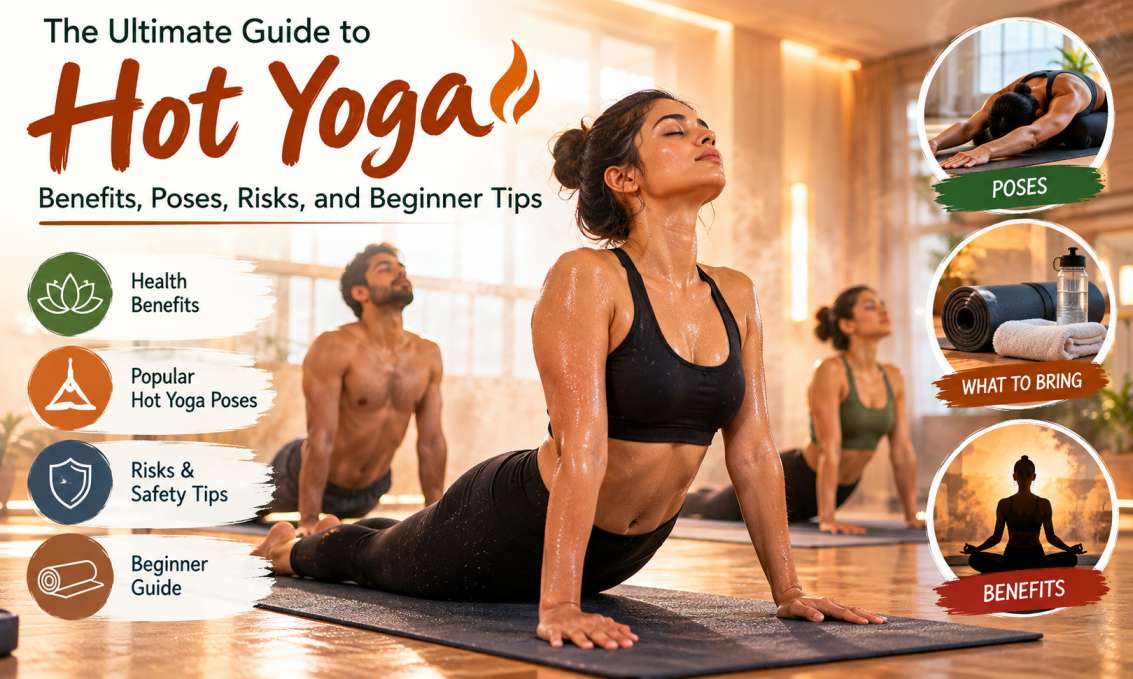
Hot yoga combines traditional yoga poses with a heated room. The warmth makes you sweat more and can make your muscles feel looser. Many people enjoy it for fitness, stress relief, and better flexibility.
But is hot yoga better than regular yoga? Can it help with weight loss? And what should you know before your first class?
This guide covers hot yoga benefits, popular styles, key poses, safety risks, and tips for beginners. You’ll learn how to choose a class and prepare for your first session.
What Is Hot Yoga? (Origins, Styles, and Names)
Hot yoga is a form of yoga practiced in a warm or hot room. Classes combine physical poses, breathing, balance, and rest. Room heat and class length vary by style.
Bikram yoga is one of the best-known forms. It uses a fixed series of 26 postures and two breathing exercises in a room heated to about 105°F (40°C), with roughly 40% humidity. A standard class lasts 90 minutes. Other hot yoga classes may use shorter sessions, flowing movements, or different room temperatures.
The Origin of Hot Yoga: From Bikram to Modern Studios
Bikram yoga grew from the Hatha yoga tradition taught by Bishnu Charan Ghosh in Kolkata. Bikram Choudhury later shaped a set sequence of poses and breathing exercises and taught it in heated studios.
The fixed order is a key part of Bikram yoga. Students repeat the same series in each class, which helps them learn the poses over time.
Modern hot yoga includes many other styles. Some classes focus on slow holds and deep stretches. Others use faster Vinyasa flows that link each movement with a breath.
Hot Yoga Names and Styles Explained
Bikram uses a set sequence of 26 poses. Teachers follow the same order in each class. Hot Vinyasa has no single fixed sequence. Teachers may change the pace, poses, and flow from one class to the next.
Infrared hot yoga vs. traditional hot yoga
Traditional hot yoga rooms often use heating systems that warm the air. Infrared studios use radiant panels that warm the body and nearby surfaces. Both can create a hot workout, but the feel of the room differs. The heat method alone does not prove that one style offers better health results.
Hot Yoga Practice in Action
Want to see what a class looks like before you join?
For your first class, choose a beginner session with a teacher who can show safer ways to modify each pose.
Top Health Benefits of Hot Yoga
Hot yoga gives you a mix of movement, balance work, muscle effort, and focused breathing. Many of its likely benefits come from yoga itself. The added heat makes the session more demanding, but it does not make every benefit greater.
Benefits of Hot Yoga vs. Regular Yoga
Both forms of yoga can help improve flexibility, strength, balance, and stress control. Hot yoga may make tight muscles feel easier to move, but you still need to stretch with care.
The heat can raise your heart rate and make you sweat more. That does not mean your heart is getting a better workout than it would during regular yoga or another form of exercise.
Research on hot yoga is still limited. Choose the type you enjoy and can practice safely, rather than picking a class just for its temperature.
Hot Yoga for Weight Loss and Calorie Burn
Hot yoga can burn calories since your body works to hold poses and move through a class. The amount depends on your body size, fitness level, class length, and effort.
One small study of a 90-minute Bikram class found an average energy use of about 286 calories, with a wide range among participants. This does not prove hot yoga burns more calories than regular yoga.
Heavy sweating can cause a short-term drop in body weight from water loss. It is not the same as losing body fat.
For steady weight loss, focus on a balanced diet, regular activity, sleep, and habits you can keep up over time.
Hot Yoga Skin Benefits: Fact vs. Myth
Exercise can improve blood flow, and some people like the warm glow they see after a class. But there is little proof that hot yoga gives special skin benefits.
Sweat, oil, friction, and dirty towels can trigger acne or make it worse. The American Academy of Dermatology suggests wearing clean workout clothes, using clean gear, and washing soon after exercise.
Bring a clean towel, avoid rubbing sweat across your face, and wash your skin after class.
Hot Yoga Detox: Myth or Fact?
Hot yoga makes you sweat, but sweat is not a major way the body removes toxins. Your liver and kidneys handle most of that work.
Sweat is mainly water, with small amounts of salt and other substances. Trying to sweat more to “detox” can lead to fluid loss and dehydration.
Hot yoga may be useful as exercise, but it should not be sold as a body cleanse. Drink enough water and let your body’s natural systems do their work.
Is Hot Yoga Dangerous? Side Effects, Safety, and Precautions
Hot yoga is not right for everyone. Heat, humidity, and hard exercise can put extra strain on the body.
Common Risks and Side Effects of Heated Yoga
The main hot yoga risks include:
- Dehydration: Heavy sweating leads to fluid loss.
- Dizziness or faintness: Heat can affect blood pressure and how you feel when standing.
- Heat exhaustion: Warning signs include nausea, headache, weakness, cramps, and heavy sweating.
- Muscle or joint injury: Heat can make a stretch feel easier than it is, so you may push too far.
- Breathing trouble: Hot, humid air can feel hard to manage for some people.
If you feel dizzy, sick, weak, or short of breath, stop the class and move to a cooler place. Drink water in small sips and cool your body. Seek urgent medical help for confusion, collapse, or other signs of severe heat illness.
Who Should Avoid Hot Yoga?
Talk to a healthcare professional before trying hot yoga if you have heart disease, trouble managing fluids, heat intolerance, a history of heat illness, or low blood pressure.
People who are pregnant should avoid hot yoga because the heat can cause overheating. The National Center for Complementary and Integrative Health advises pregnant people to choose suitable forms of yoga and discuss exercise with their healthcare provider.
Some medicines and health conditions can affect how your body handles heat. Ask your clinician if you’re unsure.
Essential Safety Tips for Beginners
- Drink water before and after class. Bring a bottle and take breaks as needed.
- Eat a light meal well before practice if you need food before exercise.
- Tell the teacher you’re new and ask about easier options.
- Rest when needed. You don’t have to complete every pose.
- Never force a stretch or hold your breath to keep up.
- Leave the hot room if you feel unwell.
Your first goal is to learn the poses and see how your body handles the heat.
Essential Hot Yoga Poses and Sequences
Hot yoga classes use many of the same poses as regular yoga. Heat may change how they feel, but good form still matters more than how far you can stretch.
The 26 Bikram Hot Yoga Poses Sequence
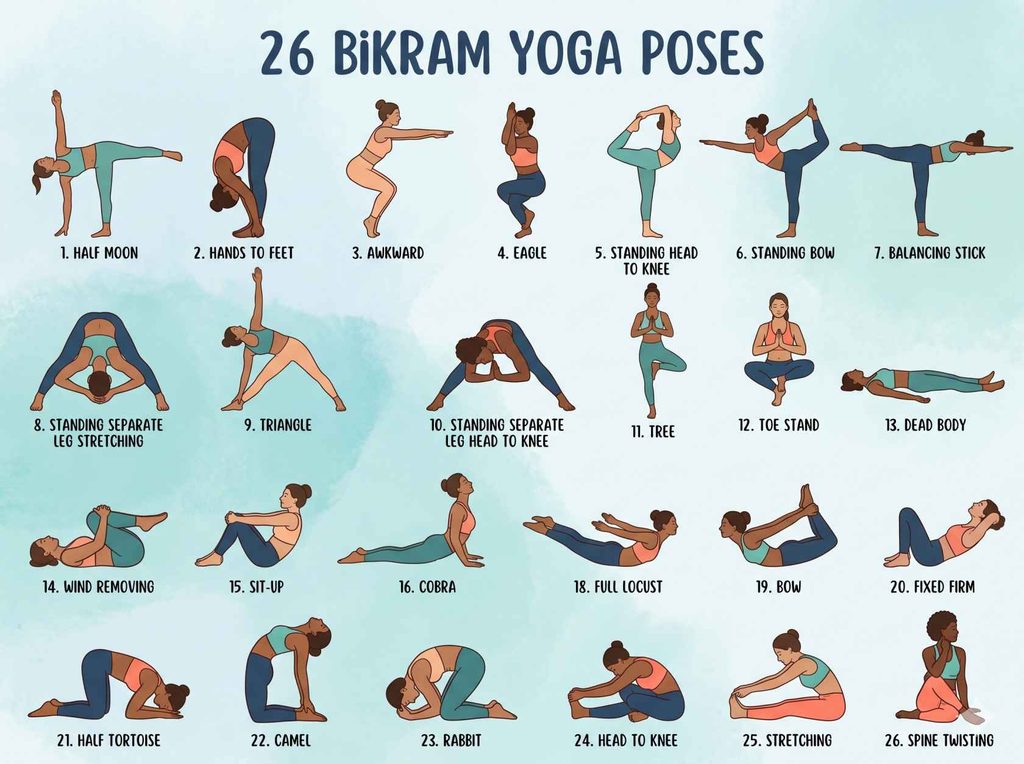
The classic Bikram series uses 26 postures in a set order, with breathing exercises at the start and end. The sequence includes:
- Half Moon Pose
- Hands to Feet Pose
- Awkward Pose
- Eagle Pose
- Standing Head to Knee
- Standing Bow Pulling Pose
- Balancing Stick Pose
- Standing Separate Leg Stretching Pose
- Triangle Pose
- Standing Separate Leg Head to Knee
- Tree Pose
- Toe Stand
- Dead Body Pose
- Wind Removing Pose
- Sit-Up
- Cobra Pose
- Locust Pose
- Full Locust Pose
- Bow Pose
- Fixed Firm Pose
- Half Tortoise Pose
- Camel Pose
- Rabbit Pose
- Head to Knee Pose
- Stretching Pose
- Spine Twisting Pose
The series begins with deep breathing and ends with a breathing exercise called Blowing in Firm.
Beginners should learn the poses with a trained teacher. Some postures need changes based on balance, flexibility, or joint health.
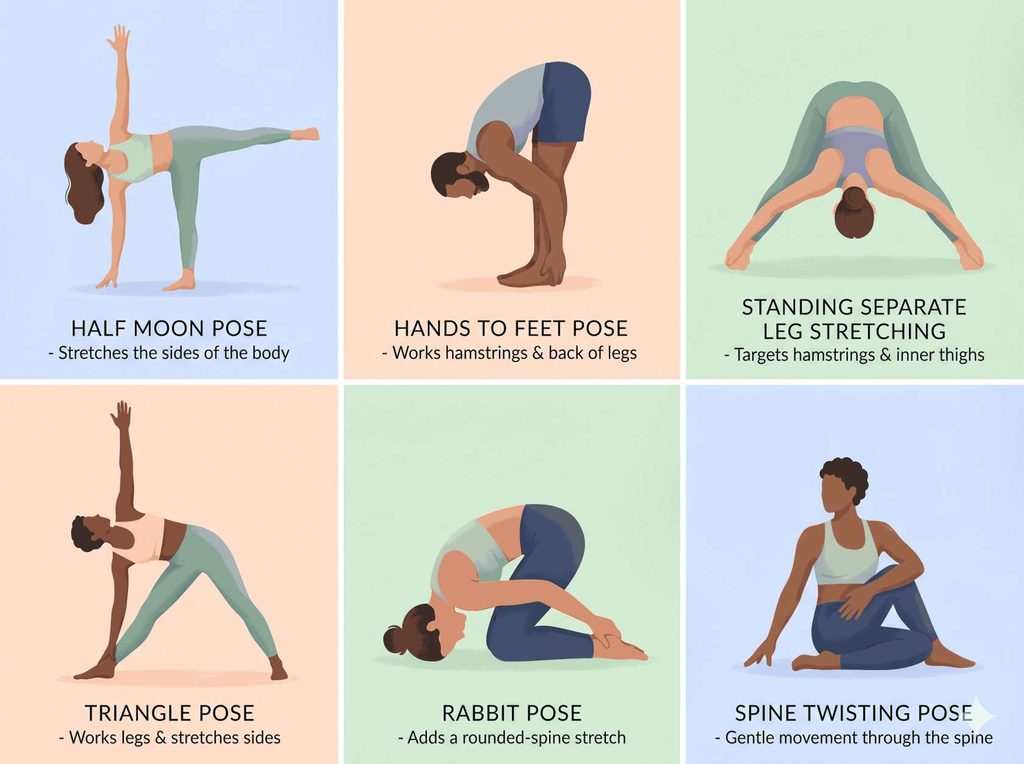
Best Hot Yoga Poses for Flexibility
These poses can help build range of motion when done with good form:
- Half Moon Pose: Stretches the sides of the body.
- Hands to Feet Pose: Works the hamstrings and back of the legs.
- Standing Separate Leg Stretching Pose: Targets the hamstrings and inner thighs.
- Triangle Pose: Works the legs and stretches the sides of the body.
- Rabbit Pose: Adds a rounded-spine stretch.
- Spine Twisting Pose: Encourages gentle movement through the spine.
Don’t use heat as a reason to push deeper. Stretch only to a firm, comfortable pull. Stop if you feel sharp pain, numbness, or joint strain.
Hot Yoga Sequence for Beginners: A Simple Routine
You don’t need to start with a full 90-minute heated class. Try this short routine in a normal room first.
| Step | Pose | Time |
| 1 | Slow standing breaths | 1 minute |
| 2 | Cat-Cow | 6 slow cycles |
| 3 | Half Moon side bends | 3 breaths per side |
| 4 | Chair Pose | 3 breaths |
| 5 | Low Lunge | 3 breaths per side |
| 6 | Downward-Facing Dog | 5 breaths |
| 7 | Low Cobra | 3 breaths |
| 8 | Child’s Pose | 5 breaths |
| 9 | Supine twist | 3 breaths per side |
| 10 | Rest on your back | 1 minute |
Move slowly and keep each pose easy. Stop if you feel pain or dizzy.
Printable routine tip: Save the table or print it for your first few practice sessions. It is a short starter routine, not a replacement for a full Bikram class.
Beginner’s Guide: What to Wear and Bring
A little planning can make your first class more comfortable.
What to Wear to Hot Yoga: Men and Women
Choose clothes that breathe, dry fast, and stay in place as you move.
For women, fitted shorts or leggings and a supportive sports bra are common choices. For men, fitted workout shorts and a light training top can work well. Many people prefer less clothing in a hot room, but comfort and coverage are personal choices.
Avoid heavy cotton clothing that holds sweat. Tie back long hair and remove items that may slip or get in the way.
Hot Yoga Packing List: Essentials for Your First Class
Bring these items:
- Non-slip yoga mat: Helps you keep your balance.
- Large sweat towel: Covers the mat and helps keep your hands and feet from slipping.
- Small face towel: Useful during breaks.
- Water bottle: Drink before and after class, and take sips during breaks.
- Clean clothes: Change after class.
- Electrolyte drink: May help after heavy sweating, especially during long or intense sessions.
- Basic toiletries: A clean towel, soap, and a bag for wet clothes make the trip home easier.
Arrive early so you can meet the teacher, choose a spot near the door if that helps you feel at ease, and learn how to leave the room safely if needed.
Final Thoughts: Is Hot Yoga Right for You?
Hot yoga can help you move, build balance, work your muscles, and take time away from daily stress. It may suit you if you enjoy warm rooms and a more demanding class.
But heat does not guarantee more fat loss, better skin, or a special detox. It brings extra risks, too.
Start with a class for beginners, drink enough water, and never ignore signs of heat stress. Regular yoga can offer many of the same core benefits without the added heat.
The best choice is the one that feels safe, fits your goals, and keeps you coming back.